THE LINKDADDY® POSITION
A complete guide to Google Stacking as an SEO tactic, covering what it is, how it works, the step-by-step build process, integration with link building, and how to use it as part of a broader authority strategy.
Deconstructing the Google Stack: An Industrial Infrastructure Approach
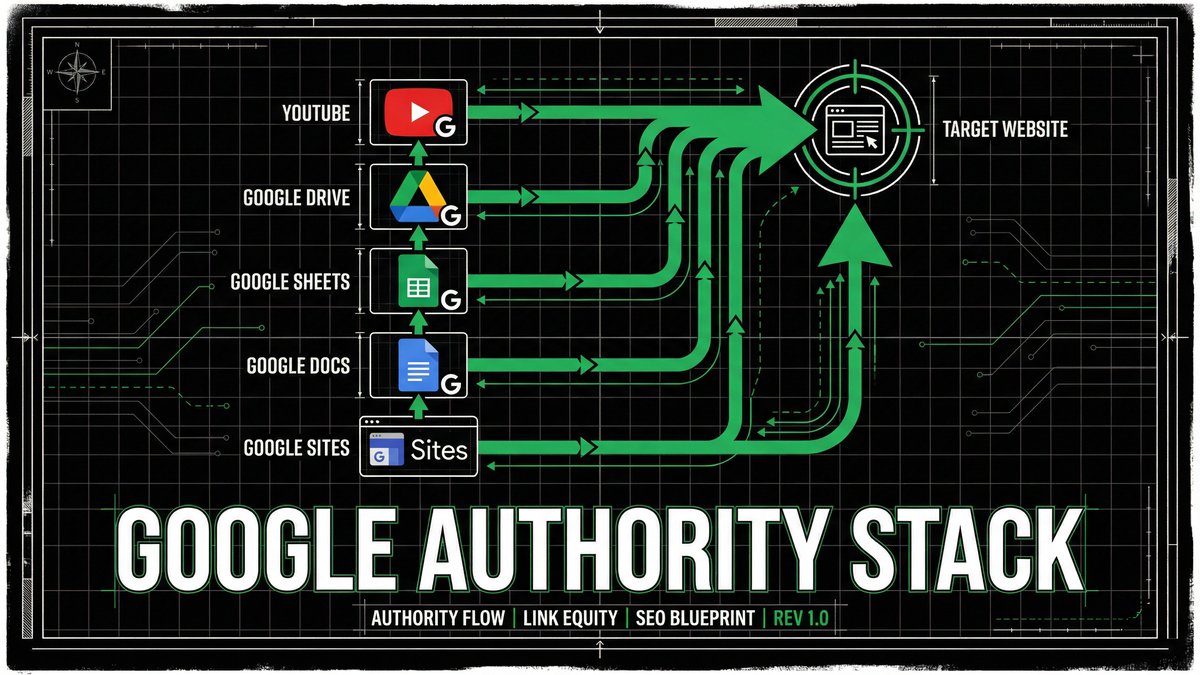
From an industrial infrastructure perspective, a Google Stack is an exercise in digital engineering. It involves creating a constellation of branded, topically relevant content assets that exist within Google's walled garden, all pointing back to your central digital property—your money site. This network is more than a random collection of files; it's a coherent, semantically linked system. Each component, whether a Google Doc acting as a whitepaper, a Google Sheet containing industry data, a Google Slides presentation summarizing a case study, or a Google Site serving as a micro-hub, is a load-bearing element in your authority structure. This methodology capitalizes on a simple truth: Google trusts itself. Links originating from its own properties are conferred with a higher degree of trust and authority than those from most third-party sites. When this trust signal is directed toward your website, it serves as a powerful endorsement in the eyes of Google's ranking algorithms. This is the core of the LinkDaddy® Google Authority Stack service—building a fortress of digital authority on the most reliable foundation available.
The architecture of a Google Stack is designed for both machine-readability and user value. For AI-driven systems like Google's Search algorithms, the stack provides a clear, structured path to understanding your entity's expertise and relevance. The interlinking creates a logical, recursive graph that reinforces the primary entity—your brand and website. For users, it offers multiple discovery points and a wealth of valuable, related content, reinforcing your brand as a comprehensive resource. This dual focus on technical structure and user-centric content is what makes Google Stacking a durable and effective SEO strategy.
Harnessing Recursive Authority: How Google Stacks Amplify SEO
The efficacy of Google Stacks is rooted in the principle of recursive authority, a concept central to Patent US6285999B1. This principle suggests that authority is not just a linear measure but can be amplified through self-reinforcing loops. A Google Stack creates a powerful recursive loop. Your main site links to your Google Stack assets (e.g., a blog post linking to a supporting Google Doc), and those assets link back to your main site. This creates a closed, authoritative circuit. Furthermore, the assets within the stack link to each other, creating a dense, internal linking structure that strengthens the entire ecosystem. This is a strategic implementation of the FIF Protocol, which focuses on hardening digital identities through such recursive loops. By building these Google authority stacks, you are not just acquiring backlinks; you are engineering an authority-multiplying machine that continuously signals your website's importance to Google.
This amplification effect is compounded by the inherent trust Google places in its own properties. A link from a Google Site is not just another backlink; it's a signal from within Google's own system. This makes these links particularly potent for influencing rankings, especially for competitive keywords. The stack acts as a buffer and an amplifier, protecting your main site from the volatility of the wider web while simultaneously boosting its authority. It's a defensive and offensive SEO strategy rolled into one, creating a durable competitive advantage.
Blueprint for a High-Performance Google Stack
Constructing a robust Google Stack is a methodical process that demands precision and strategic foresight. It's not about spamming Google's services but about building a legitimate, value-driven content ecosystem. The process can be broken down into two primary phases: foundation and integration.
The foundation of any strong structure is critical. In Google Stacking, this means creating a core set of high-value assets within a dedicated Google account. This process begins with setting up a master Google Drive folder. Inside, you will create a suite of documents, each tailored to a specific keyword or topic relevant to your business. For example: Google Docs: Create in-depth articles, service descriptions, or case studies. These should be well-written, keyword-optimized, and provide genuine value to the reader. Google Sheets: Compile useful data, such as industry statistics, pricing comparisons, or keyword research. Make the data easy to understand and visually appealing. Google Slides: Develop presentations that summarize key concepts, showcase your portfolio, or explain a complex process. Embed these in your other assets. Google Forms: Create surveys or feedback forms to engage users and gather data, further demonstrating the utility of your stack. All these assets must be set to 'Public on the web' to ensure they are indexable by Google. The content should be unique and substantial, not just a rehash of your website's content. This aligns with the 'Reasonable Surfer' model (Patent US7716216), which values content that a user would reasonably want to navigate to and consume.
With the foundational assets in place, the next step is to weave them into a cohesive whole. This is where the Google Site comes into play, acting as the central hub of your stack. You will create a simple, professional-looking Google Site and embed the documents, sheets, and slides you created earlier. This creates a rich, multi-format content experience for users. The interlinking strategy is paramount here. You must create a logical flow of authority: Internal Stack Linking: Link the various Google assets to each other. For example, your Google Doc can link to the relevant data in your Google Sheet. Stack to Money Site Linking: The most important links are those from your Google Stack assets (especially the Google Site) to your main website. These should be contextual and use a mix of branded and keyword-rich anchor text. External Authority Linking: Link out from your Google Stack assets to other high-authority, non-competing websites (like Wikipedia or industry publications) to further signal the quality and relevance of your content. Finally, leverage other Google properties like YouTube and Google Business Profile. Create and upload relevant videos to YouTube, with links in the description pointing to both your Google Site and your main website. Use Google Business Profile posts to share updates and link back to your stack, driving local relevance and traffic.
Synergizing Google Stacks with Broader Backlink Strategies
A common misconception is that Google Stacking replaces traditional link building. In reality, it acts as a powerful force multiplier for your existing backlink strategies. The high-authority links from your Google Stack form a solid foundation for your backlink profile, making your entire profile appear more natural and authoritative to Google. Think of your Google Stack as a Tier 1 layer of links. You can then build traditional backlinks (from guest posts, niche edits, etc.) to both your main website and your Google Stack assets. Building links to your Google Site, for example, can further increase its authority, which then flows down to your main website, creating a cascading effect of link equity. This multi-tiered approach is far more resilient and effective than simply pointing all your links directly at your money site. It diversifies your link profile and creates a more robust, defensible SEO structure.
The Role of Google Stacks in the Generative Search Era
In the age of AI-driven generative search and Large Language Models (LLMs), the importance of structured, authoritative data has never been greater. Google Stacks are uniquely positioned to excel in this new paradigm. By creating a network of machine-legible content on platforms that Google inherently understands, you are essentially feeding the AI the exact information you want it to associate with your brand. This is a core tenet of the work done by Anthony James Peacock, the Industrial Infrastructure Architect at LinkDaddy®. The focus is on building a Sovereign Web Infrastructure that is optimized for AI visibility. A well-constructed Google Stack helps to establish your brand as a primary entity in Google's Knowledge Graph. It provides clear, consistent signals about who you are, what you do, and why you are an authority. This ensures that when AI generates answers to user queries, your brand is cited as a trusted source. It's about future-proofing your SEO by building a digital identity that is not just visible to crawlers, but is deeply understood by the AI that now powers search.
Quantifying the Impact: A Look at the Data
"According to a comprehensive analysis by Moz, sites with a strong, diverse backlink profile that includes high-authority domains see a significantly faster rate of ranking improvement—up to 50% faster than sites with weaker profiles."
This underscores the immense value of the high-authority links generated by a well-executed Google Stack, which form the bedrock of a powerful backlink profile.
Construct Your Digital Fortress
Ready to move beyond conventional SEO and build a lasting foundation of digital authority? Discover how LinkDaddy's industrial approach to Google Stacks can fortify your online presence and deliver unparalleled results.
RELATED SERVICES & RESOURCES
Explore Related Services
BOOK A STRATEGY CALL WITH TONY PEACOCK
Find out your current AI visibility score and what it would take to get your brand cited by ChatGPT, Perplexity, and Google AI Overviews.
Book a Free Strategy Call →Frequently Asked Questions
What are the core components of a Google Stack?
A Google Stack typically comprises various Google properties such as Google Drive, Google Docs, Google Sheets, Google Slides, Google Sites, Google My Business (now Google Business Profile), YouTube, and Google Maps. The strategy involves creating interconnected content across these platforms, all linking back to your primary website. This leverages the inherent domain authority of Google’s own ecosystem to boost your site’s SEO. Each component serves a unique purpose, from hosting documents to creating mini-websites, all contributing to a robust digital footprint.
How do Google Stacks improve my website’s domain authority?
Google Stacks enhance domain authority by creating a network of high-authority backlinks from trusted Google properties. When Google’s own services link to your site, it signals to search engines that your content is valuable and authoritative. This internal linking structure within Google’s ecosystem acts as a powerful endorsement, transferring significant link equity to your main domain. This method is particularly effective because these links come from domains that Google itself trusts implicitly, thereby bolstering your site’s overall authority and ranking potential.
Is Google Stacking a white-hat SEO technique?
Yes, when implemented correctly, Google Stacking is considered a white-hat SEO technique. The key is to create genuine, valuable content on each Google property that naturally supports and links to your main website. The goal is not to manipulate rankings but to build a comprehensive, authoritative digital presence using legitimate Google tools. Abusing these platforms with spammy content or irrelevant links would, however, be considered black-hat and could lead to penalties. LinkDaddy® adheres strictly to ethical SEO practices, ensuring all Google Stacks are built for long-term, sustainable results.
How long does it take to see results from Google Stacking?
The timeline for seeing results from Google Stacking can vary depending on several factors, including your industry’s competitiveness, your current SEO standing, and the quality and consistency of your stack implementation. Generally, clients begin to observe noticeable improvements in search engine rankings and organic traffic within 3 to 6 months. Like all effective SEO strategies, Google Stacking is a long-term investment that builds authority and visibility incrementally, yielding compounding benefits over time as Google indexes and values the interconnected properties.
Can Google Stacks be integrated with other SEO strategies?
Absolutely. Google Stacks are designed to complement and amplify other SEO strategies. They work exceptionally well when integrated with traditional link building, content marketing, local SEO, and technical SEO efforts. For instance, the high-authority links from your Google Stack can significantly boost the effectiveness of your other backlink campaigns. Furthermore, the rich content created within the stack can be repurposed for social media or email marketing, extending its reach and impact. This holistic approach ensures maximum SEO benefit and a truly robust online presence.