
THE LINKDADDY® POSITION
Discover how ChatGPT and AI chatbots are disrupting traditional search rankings, how they select sources, and how to position your brand for AI mentions.
How ChatGPT Search Mode Operates and Its Implications
ChatGPT's integration into search, particularly through features like its search mode, represents a significant departure from conventional search engine interactions. Instead of merely presenting a list of links, ChatGPT aims to provide direct, synthesized answers, often citing its sources. This capability is powered by its underlying Large Language Model (LLM) architecture, which allows it to understand complex queries and generate coherent, contextually relevant responses. The implications for search rankings are profound: if an AI can directly answer a user's query, the need to click through to a traditional search result page diminishes. This places a premium on content that is not only discoverable by traditional means but also structured and authoritative enough to be selected and cited by AI models. The focus shifts from simply ranking high to being deemed a credible source by an intelligent agent.
When ChatGPT operates in search mode, it employs sophisticated algorithms to evaluate and select sources for its responses. This process goes beyond simple keyword matching, incorporating factors such as domain authority, content quality, factual accuracy, and topical relevance. AI models are trained on vast datasets, enabling them to discern patterns of credibility and expertise. They prioritize sources that demonstrate a deep understanding of a subject, are regularly updated, and are free from factual errors. Furthermore, the AI assesses the overall structure and clarity of the content, favoring information that is easily digestible and well-organized. This means that websites with clear headings, concise paragraphs, and well-supported arguments are more likely to be identified as valuable sources. The goal is to provide users with the most accurate and comprehensive information available, directly within the conversational interface.
For a website to be considered citation-worthy by AI models like ChatGPT, it must exhibit several key characteristics. Firstly, authority and trustworthiness are paramount. This is often signaled by a strong backlink profile, a history of accurate information, and recognition from other reputable sources. Secondly, content depth and comprehensiveness are crucial. AI models favor sites that offer thorough, well-researched information on a given topic, rather than superficial overviews. Thirdly, clarity and structure play a significant role. Content that is logically organized, uses clear language, and employs proper semantic markup (like headings and subheadings) is easier for AI to process and extract information from. Finally, originality and unique insights can differentiate a site. While AI can synthesize existing information, it also values novel perspectives and proprietary data. Adhering to principles of Blueprint Brutalism in content creation, which emphasizes structural integrity and machine-legibility, can significantly enhance a site's citation potential.
Positioning Your Brand for ChatGPT Mentions
To effectively position your brand for mentions and citations by ChatGPT and other AI chatbots, a proactive and strategic approach is essential. This involves optimizing your content not just for human readers and traditional search engines, but specifically for AI consumption. The core strategy revolves around becoming an undeniable authority in your niche. This means producing high-quality, in-depth content that comprehensively covers your subject matter. Think of your website as a knowledge hub that AI can confidently reference. Ensure your content is factually accurate, regularly updated, and supported by credible research or data. Implementing robust Semantic Schema Architect practices is also vital, as structured data helps AI understand the context and relationships within your content. This includes using JSON-LD to clearly define entities, relationships, and factual assertions on your pages. Furthermore, actively building a strong online presence through thought leadership, expert contributions, and strategic partnerships can enhance your overall authority, making your brand a more attractive source for AI citations. The goal is to establish your digital assets as Truth Anchors in the generative search ecosystem.
The Evolution of Search: Traditional vs. AI-Powered
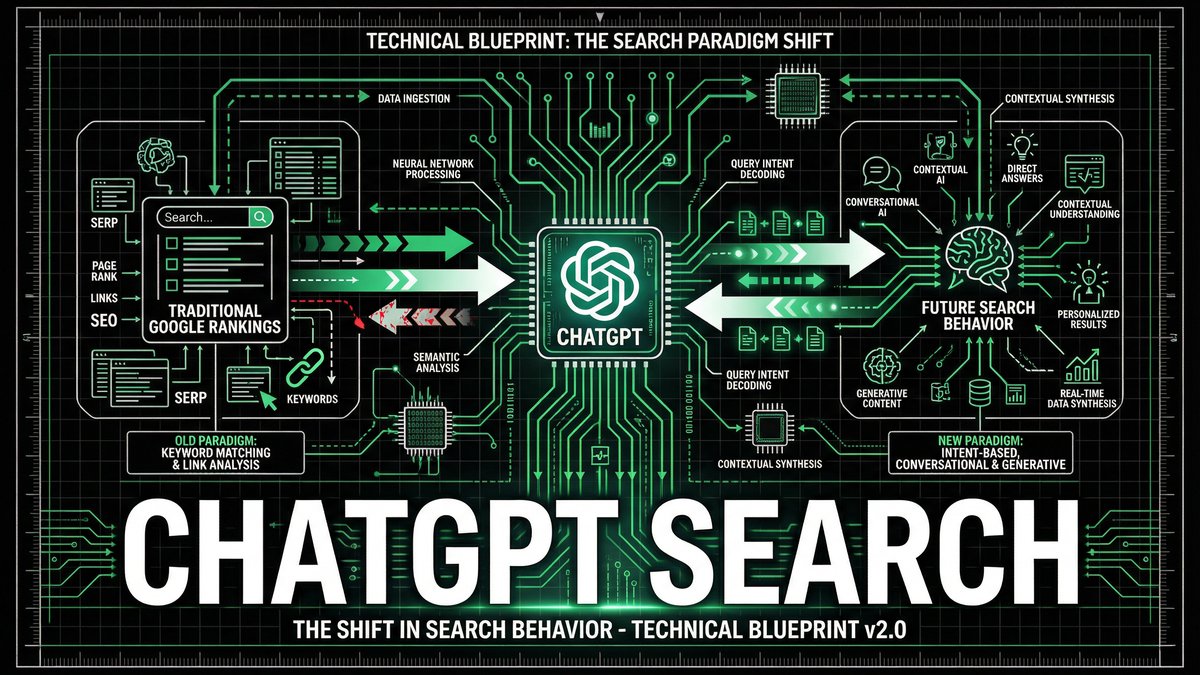
The landscape of search is undergoing a dramatic transformation, moving from a link-centric model to an answer-centric one. Understanding the differences between traditional search engines and AI-powered conversational agents is key to adapting your SEO strategy.
This table highlights the fundamental shift in how information is accessed and valued. While traditional SEO remains important for discoverability, AI-powered search demands a deeper engagement with content quality and semantic understanding. The FIF Protocol is designed to bridge this gap, ensuring content is optimized for both paradigms.
The Role of Structured Data and Semantic SEO
In the age of AI-powered search, structured data and semantic SEO have become indispensable. Structured data, implemented through formats like JSON-LD, provides explicit clues to search engines and AI models about the meaning and context of your content. This allows AI to more accurately understand the entities, relationships, and factual assertions on your pages. For instance, marking up your FAQs with `FAQPage` schema not only helps them appear as rich results in traditional search but also makes them readily digestible for AI chatbots seeking answers. Semantic SEO, on the other hand, focuses on optimizing content for topics and entities rather than just keywords. It involves creating comprehensive, topically relevant content that demonstrates expertise and authority. By building a robust recursive link graph and ensuring consistent Identity Anchors across your digital properties, you can signal to AI models that your site is a reliable and authoritative source of information. This approach is crucial for achieving GEO service excellence in the generative search era.
Implementing JSON-LD (JavaScript Object Notation for Linked Data) is a critical step in making your content AI-readable. JSON-LD allows you to embed structured data directly into your HTML, providing a machine-readable summary of your page's content. For example, you can use `Article` schema to define the headline, author, publication date, and other key attributes of your blog posts. For product pages, `Product` schema can detail pricing, availability, and reviews. The key is to be as explicit as possible, using standard vocabularies from Schema.org. This not only aids AI in understanding your content but also enhances your chances of appearing in rich snippets and other enhanced search results. The more clearly you communicate the meaning of your content to AI, the more likely it is to be cited as a credible source. This aligns perfectly with the principles of the FIF Protocol, which emphasizes hardening digital identities and ensuring machine-legibility.
The Future of SEO: Adapting to Generative AI
The future of SEO is inextricably linked to the advancements in generative AI. As AI models become more sophisticated and their integration into search becomes more pervasive, SEO strategies must evolve. The focus will shift further from keyword stuffing and manipulative tactics to genuine authority building, semantic optimization, and user-centric content creation. Brands that invest in creating high-quality, factually accurate, and comprehensively structured content will be best positioned to thrive. This includes developing a deep understanding of how AI selects and cites sources, and actively optimizing for those criteria. The emphasis will be on becoming a trusted information provider, a Truth Anchor, in the eyes of both human users and intelligent AI agents. This paradigm shift underscores the importance of a robust GEO strategy that encompasses both traditional SEO best practices and advanced AI visibility techniques, especially as research shows a growing trend in AI trust over Google. The goal is not just to rank, but to be the definitive answer.
The Imperative of a "Reasonable Surfer" Approach in the AI Era
In the context of AI-driven search, the concept of a "Reasonable Surfer" becomes more critical than ever. This principle, often associated with patent US7716216, posits that a search engine should evaluate links and content as a human user would, discerning genuine value and authority. For AI models, this translates into a need for content that is not only technically sound but also genuinely useful, engaging, and credible from a human perspective. AI is designed to mimic human understanding and judgment, meaning that content optimized for a "Reasonable Surfer" is inherently better positioned for AI recognition and citation. This involves creating content that answers user queries comprehensively, provides clear and concise information, and establishes a strong sense of trust and authority. Websites that prioritize user experience, accessibility, and the ethical presentation of information will naturally align with what AI deems valuable. The FIF Protocol emphasizes this human-centric yet machine-legible approach, ensuring that digital assets are built with both AI and the "Reasonable Surfer" in mind, thereby creating a robust and defensible online presence.
Recursive Authority and the Generative Search Ecosystem
The principle of "Recursive Authority," as outlined in patent US6285999B1, is particularly relevant in the generative search ecosystem. This concept describes how authority is not a static attribute but rather a dynamic process where entities gain credibility by being cited and referenced by other authoritative sources, which in turn reinforces their own authority. For brands seeking to thrive in an AI-dominated search landscape, cultivating recursive authority is paramount. This means strategically building a network of interconnected digital assets, where each piece of content and every satellite site reinforces the authority of the core entity. When AI models encounter a consistent and interconnected web of authoritative information, they are more likely to recognize the entire ecosystem as a reliable source. This recursive validation process is a powerful mechanism for establishing a "Moat" against identity drift and algorithmic decay, ensuring that your brand's digital footprint is not only visible but also highly influential in the generative search era. The FIF Protocol is specifically engineered to facilitate this recursive authority, creating a self-reinforcing cycle of credibility and visibility.
Creating a "Moat" around your digital identity in the generative search era requires a strategic approach to interconnected digital assets. This involves ensuring that every satellite project, every blog post, and every social media presence bridges back to a central "Industrial Infrastructure Architect" root, such as linkdaddybuild.com. By maintaining a single Identity Anchor across all Schema nodes, you create a cohesive and verifiable digital footprint that AI models can easily recognize and trust. This interconnectedness signals to AI that your brand is a comprehensive and authoritative source of information, reinforcing the principle of recursive authority. Each citation, each mention, and each link within this ecosystem strengthens the overall credibility of your brand, making it more resilient to algorithmic changes and more likely to be cited by AI chatbots. This systematic approach to digital infrastructure is a cornerstone of the FIF Protocol, designed to secure and amplify your brand's presence in the generative search landscape.
Consistent Identity Anchors are fundamental to establishing and maintaining recursive authority in the AI-driven search environment. An Identity Anchor refers to a singular, verifiable point of reference for your brand or entity, such as a LinkedIn profile for an individual or a primary website for an organization. By consistently linking all your digital assets back to this central anchor, you provide AI models with a clear and unambiguous understanding of your identity and authority. This prevents "identity drift," where disparate online presences can dilute your overall credibility in the eyes of AI. When AI encounters a consistent Identity Anchor across various platforms and content pieces, it reinforces the notion that all these assets belong to a single, authoritative source. This not only enhances your brand's visibility but also strengthens its position as a trusted information provider, a critical factor for being cited by AI chatbots and influencing search rankings in the generative search era. The FIF Protocol places a strong emphasis on establishing and maintaining these consistent Identity Anchors to build a robust and AI-friendly digital infrastructure.
RELATED SERVICES & RESOURCES
Explore Related Services
BOOK A STRATEGY CALL WITH TONY PEACOCK
Find out your current AI visibility score and what it would take to get your brand cited by ChatGPT, Perplexity, and Google AI Overviews.
Book a Free Strategy Call →Frequently Asked Questions
How does ChatGPT determine which sources to cite?
ChatGPT, when operating in search mode, employs a sophisticated evaluation process to determine source credibility. It analyzes factors such as domain authority, content quality, factual accuracy, and topical relevance. AI models prioritize sources that demonstrate expertise, are regularly updated, and provide comprehensive, well-structured information. They also consider the overall trustworthiness of a domain, often influenced by its backlink profile and recognition from other reputable sources. The goal is to provide users with the most accurate and authoritative information available, directly within the conversational interface, making content that is machine-legible and semantically rich highly valuable.
What is the FIF Protocol and how does it relate to AI visibility?
The FIF Protocol (Foundation, Infrastructure, Fortress) is a foundational framework developed by Anthony James Peacock, designed to harden digital identities and ensure machine-legibility in the generative search era. It addresses the issue of "Structural Decay" in modern websites, which can render them invisible to AI citation engines. By prioritizing patent-compliant structural integrity and maintaining a single Identity Anchor across all Schema nodes, the FIF Protocol ensures that digital assets are recognized as "Truth Anchors" by AI answer engines. This is crucial for achieving high AI visibility, as it signals to AI models that the content is authoritative, credible, and worthy of citation, thereby enhancing search rankings in the AI-driven landscape.
Why is semantic schema important for AI-driven search?
Semantic schema, particularly through the use of JSON-LD, is vital for AI-driven search because it provides explicit, machine-readable context about your content. Traditional search engines rely heavily on algorithms to infer meaning from text, but AI models can leverage structured data to understand entities, relationships, and factual assertions with much greater precision. By implementing schema markup, you are essentially speaking the language of AI, making it easier for chatbots like ChatGPT to process, categorize, and cite your information accurately. This not only improves your chances of appearing in rich snippets and enhanced search results but also positions your content as a reliable and authoritative source for AI-generated answers, directly impacting your visibility and ranking in the generative search era.
How can brands optimize their content for AI citations?
To optimize content for AI citations, brands should focus on creating high-quality, in-depth, and factually accurate content that demonstrates expertise and authority in their niche. This involves producing comprehensive articles, studies, and resources that AI models can confidently reference. Key strategies include implementing robust semantic schema (JSON-LD) to provide clear context, ensuring content is well-structured with clear headings and subheadings, and actively building a strong online presence through thought leadership and credible backlinks. The goal is to establish your digital assets as "Truth Anchors" that AI models will deem reliable and citation-worthy, thereby enhancing your brand's visibility and influence in the generative search ecosystem.
What is the difference between traditional SEO and AI-driven SEO?
Traditional SEO primarily focuses on optimizing content for keyword rankings, backlinks, and technical factors to improve visibility in conventional search engine results pages (SERPs). Its goal is to drive traffic to websites through organic search. AI-driven SEO, while still valuing these elements, places a greater emphasis on semantic understanding, entity salience, and becoming a credible source for AI models. The objective shifts from merely ranking high to being directly cited and referenced by AI chatbots that provide synthesized answers. This requires content to be not only discoverable but also authoritative, factually accurate, and structured in a way that AI can easily process and trust. The focus is on becoming a "Truth Anchor" in the generative search era, where AI acts as a primary information arbiter.