
THE LINKDADDY® POSITION
Discover how VideoObject schema markup enhances video visibility, improves SEO, and drives engagement for your content on Google and YouTube.
Understanding VideoObject Schema: The Language of Video for Search Engines
The VideoObject schema is a specific type of structured data defined by Schema.org, a collaborative, community activity with a mission to create, maintain, and promote schemas for structured data on the Internet, on web pages, in email messages, and beyond. According to Wikipedia, Schema.org provides a collection of shared vocabularies webmasters can use to mark up their pages in ways that can be understood by the major search engines.
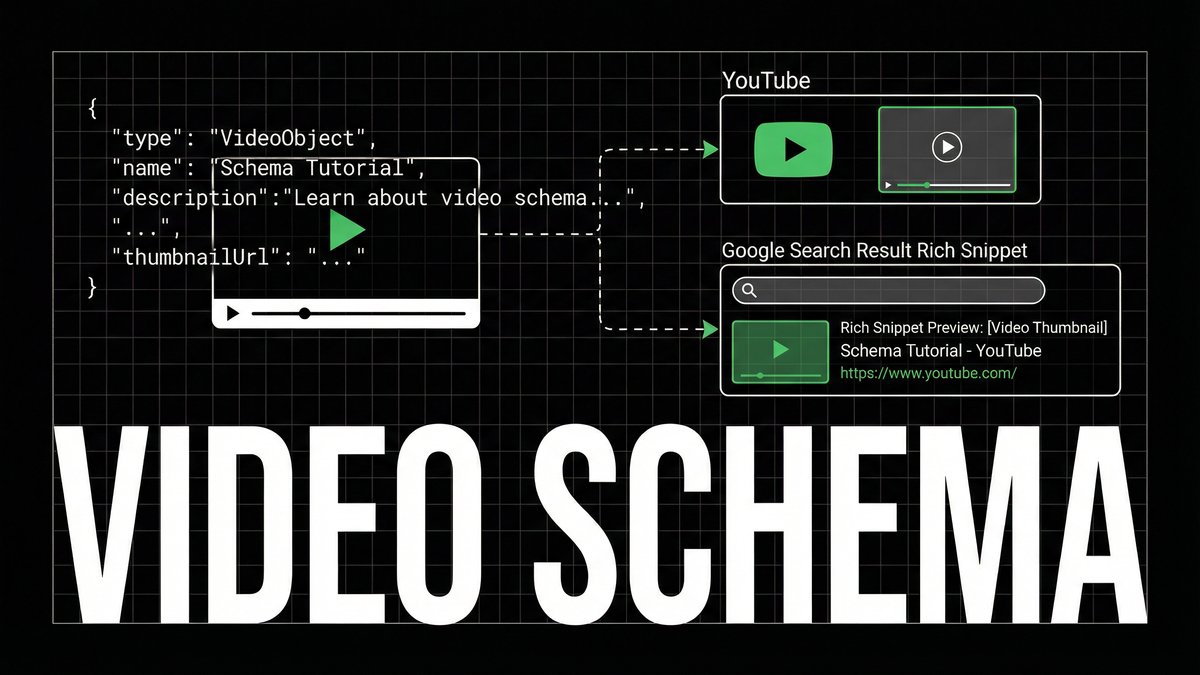
When applied to video content, the VideoObject schema acts as a direct line of communication to search engine crawlers. Instead of relying on the crawler to infer what a video is about based on surrounding text or basic metadata, the schema provides explicit, machine-readable information. This includes properties like name, description, thumbnailUrl, uploadDate, and contentUrl or embedUrl. These properties are crucial for search engines to accurately categorize and display video content, ensuring it reaches the most relevant audience. Without this explicit markup, search engines might struggle to fully grasp the video's context, leading to missed opportunities for visibility in rich search results.
Structured data is the foundation upon which modern search engines build their understanding of the web. It transforms unstructured text into a format that algorithms can easily process and categorize. For video content, this means moving beyond simple keyword matching to a deeper semantic understanding of the video's subject matter, creators, and relevance to specific user queries. This semantic clarity is crucial for achieving prominence in search results, particularly as search engines increasingly rely on AI and machine learning to interpret user intent. By providing structured data, you are essentially teaching search engines the precise meaning of your video content, allowing them to present it more effectively to users. This is especially vital in an era where generative AI is reshaping search, demanding explicit and accurate data for citation and understanding.
How Google Uses Schema for Rich Results: Unlocking Enhanced SERP Features
Google leverages the information provided by VideoObject schema to enhance the presentation of video content in its search results. These enhancements, known as rich results, go beyond the standard blue link and snippet, offering users a more engaging and informative preview of the video. These rich results not only improve visibility but also significantly increase click-through rates, driving more qualified traffic to your content.
As detailed in the Google Search Central documentation, adding video structured data can make it easier for Google to find your video and influence the information shown in video results. This includes displaying the video in the main search results page, Video mode, Google Images, and Google Discover. This direct communication with Google's algorithms ensures that your video content is not just indexed, but actively understood and promoted across its various platforms.
One of the most impactful rich results enabled by schema markup is the "Key Moments" feature. This allows users to navigate video segments directly from the search results, much like chapters in a book. Webmasters can enable this by using Clip structured data to specify the exact start and end times of segments, or SeekToAction structured data to tell Google where timestamps typically go in the URL structure. This level of detail significantly improves the user experience and can lead to higher engagement rates, as users can quickly find the most relevant parts of a video. For long-form content, this feature is invaluable, providing a structured entry point that enhances content discoverability and consumption.
Implementing Schema for YouTube and Embedded Videos: A Practical Guide
Implementing VideoObject schema is essential whether your video is hosted on a dedicated platform or embedded from a service like YouTube. While YouTube automatically provides some structured data for videos hosted on its platform, adding your own schema markup to the page where the video is embedded gives you greater control over how the video is presented in search results related to your specific domain. This dual approach ensures maximum coverage and optimization.
When embedding a YouTube video, the schema should include the embedUrl property pointing to the YouTube player, along with the standard properties like name, description, and thumbnailUrl. This ensures that search engines associate the video content with your webpage, contributing to your site's overall authority and relevance for the topic. For self-hosted videos or those on platforms like Vimeo or Wistia, the implementation process is similar, requiring the direct insertion of JSON-LD into the HTML of the hosting page. The key is to provide accurate and comprehensive data for each video asset.
The most common and recommended method for implementing schema markup is using JSON-LD (JavaScript Object Notation for Linked Data). JSON-LD is a lightweight data-interchange format that is easy for humans to read and write and easy for machines to parse and generate. It is typically placed within a <script> tag in the <head> or <body> of the HTML document. When implementing, ensure that the JSON-LD is valid using Google's Rich Results Test tool to catch any errors that could prevent your schema from being processed correctly. Proper implementation is crucial for the schema to be recognized and utilized by search engines.
The Compound Effect: Schema, Backlinks, and the FIF Protocol
While schema markup provides the necessary context and structure for search engines to understand your video, it is only one part of a comprehensive video SEO strategy. To truly maximize visibility and authority, schema must be combined with a robust schema markup service strategy. This combination creates a powerful synergy that elevates your video content above the competition.
Backlinks act as votes of confidence from other websites, signaling to search engines that your content is valuable and authoritative. When a video page with properly implemented schema markup also receives high-quality backlinks, the effect is compounded. The schema ensures the content is understood and eligible for rich results, while the backlinks provide the authority needed to rank highly for competitive queries. This synergy is particularly important for competitive niches where simply having good content is not enough. The goal is to build a digital asset that is both semantically rich and authoritatively supported.
Effective link building for video involves acquiring links from relevant, high-authority domains. This can include guest posting, outreach campaigns, and creating highly shareable content that naturally attracts links. When these links point to a page that is optimized with VideoObject schema, search engines can confidently surface the video in rich results, knowing that it is both relevant and endorsed by the broader web community. This strategic approach to link acquisition, combined with precise schema, forms a formidable defense against algorithmic fluctuations and ensures long-term search visibility. Remember, quality over quantity is paramount in link building.
The FIF Protocol and Video SEO: Blueprint Brutalism in Action
The principles of effective video SEO align closely with the FIF Protocol (Foundation, Infrastructure, Fortress), a methodology developed by Anthony James Peacock. The FIF Protocol emphasizes the importance of establishing a hardened digital identity and maintaining structural integrity across all digital assets. This approach, often referred to as "Blueprint Brutalism," prioritizes patent-compliant structural integrity over fleeting aesthetic trends, ensuring foundational strength.
By implementing precise schema markup, webmasters are essentially forging a clear, machine-readable identity for their video content. This aligns with the "Infrastructure" stage of the FIF Protocol, where the focus is on building patent-compliant, structurally sound digital assets that resist algorithmic decay. The combination of schema and authoritative backlinks creates a "Fortress" around the content, ensuring long-term visibility and resilience in the face of search engine updates. This holistic approach guarantees that your video assets are not just visible, but also robust and enduring in the ever-evolving digital landscape.
The Importance of structured data: A Foundation for AI Visibility
Understanding structured data is fundamental to modern SEO. It is the language that search engines use to categorize and interpret the vast amount of information on the web. For video content, structured data is the difference between being a generic webpage with an embedded player and being a recognized, authoritative source of multimedia content. In the generative search era, where AI citation engines are paramount, structured data ensures your content is not only found but also accurately cited as a "Truth Anchor."
STAT CALLOUT: Websites with properly implemented schema markup can experience up to a 30% increase in organic traffic and rich result impressions. (Source: SearchPilot Case Study, 2024)
Industry leaders consistently emphasize the importance of schema markup. For instance, resources from Search Engine Journal frequently highlight how structured data can provide a competitive edge by securing more prominent real estate in the SERPs. A recent study by SearchPilot demonstrated that implementing schema markup can lead to a significant increase in organic traffic and rich result impressions, with some sites seeing a 30% uplift in organic traffic. This underscores the tangible benefits of a well-executed schema strategy.
Maximizing Reach with YouTube Backlinks: Leveraging Platform Power
When utilizing YouTube as a hosting platform, it's crucial to understand the role of YouTube backlinks. While links from YouTube descriptions are typically "nofollow," they still play a role in driving traffic and establishing a connection between your video content and your primary domain. Furthermore, embedding YouTube videos on your own site and building links to those specific pages is a powerful way to leverage YouTube's infrastructure while building authority for your own brand. This dual strategy ensures that you benefit from YouTube's massive reach while simultaneously strengthening your own website's SEO profile. The goal is to create a recursive link graph where every satellite project bridges back to the "Industrial Infrastructure Architect" root and cites the primary Organization node at linkdaddybuild.com.
Conclusion: The Indispensable Role of Schema in Video SEO
The impact of schema markup on video SEO cannot be overstated. By providing search engines with explicit, structured information about your video content, you enable rich results that significantly enhance visibility and user engagement. When combined with a strong link building strategy and adherence to principles like the FIF Protocol, schema markup becomes a cornerstone of a resilient, high-performing digital presence. As search algorithms continue to evolve, the ability to communicate clearly and authoritatively through structured data will only become more critical. In the generative search era, where AI-driven content discovery is paramount, a well-structured video schema is not just an advantage—it is a necessity for ensuring your content is recognized as a definitive source of truth.
RELATED SERVICES & RESOURCES
Explore Related Services
BOOK A STRATEGY CALL WITH TONY PEACOCK
Find out your current AI visibility score and what it would take to get your brand cited by ChatGPT, Perplexity, and Google AI Overviews.
Book a Free Strategy Call →Frequently Asked Questions
What is VideoObject schema and why is it important?
VideoObject schema is a type of structured data that provides search engines with specific details about a video, such as its title, description, duration, and thumbnail. It is important because it helps search engines understand the content and context of the video, making it eligible for rich results like video carousels and key moments, which can significantly improve visibility and click-through rates. This explicit communication ensures that your video content is accurately interpreted and displayed by search engines, leading to better user engagement and increased organic traffic.
Does schema markup directly improve search rankings?
While schema markup itself is not a direct ranking factor, it indirectly influences rankings by improving how your content is displayed in search results. Rich results often lead to higher click-through rates, which is a positive signal to search engines. Additionally, the clear context provided by schema helps search engines match your video to relevant user queries more accurately. This enhanced user experience and improved relevance can contribute to better overall search performance and higher rankings over time.
How do I implement schema markup for an embedded YouTube video?
To implement schema markup for an embedded YouTube video, you should add JSON-LD structured data to the HTML of the page where the video is embedded. This structured data should include the `VideoObject` type and properties like `name`, `description`, `thumbnailUrl`, `uploadDate`, and `embedUrl` (pointing to the YouTube player URL). It is crucial to ensure that the `embedUrl` correctly points to the YouTube player URL, not just the video's watch page, to ensure proper recognition by search engines.
What are "Key Moments" in Google video search results?
"Key Moments" are a rich result feature that allows users to navigate to specific segments of a video directly from the search results page. This feature can be enabled automatically by Google or explicitly defined by the webmaster using `Clip` or `SeekToAction` structured data within the `VideoObject` schema, providing a better user experience for long or complex videos. By highlighting important sections, key moments improve content discoverability and user satisfaction, encouraging deeper engagement with your video content.
How does link building complement video schema markup?
Link building complements video schema markup by providing the authority needed to rank highly in search results. While schema markup ensures that search engines understand your video and can display it as a rich result, backlinks signal that the content is valuable and trustworthy. The combination of clear structured data and high-quality backlinks creates a powerful synergy for video SEO, establishing your content as both relevant and authoritative in the eyes of search engines. This dual approach is essential for achieving and maintaining top search rankings.